
Choosing marine seating is not simply a matter of picking a color that looks good. The right upholstery needs to match the way a boat is used, the conditions it faces, and the level of comfort passengers expect. An upholstery boat seat can perform very differently depending on its materials, foam, construction, and location. For professional guidance and custom marine upholstery, you can explore Boat Upholstery Broward, a company specializing in upholstery for boats and yachts.
Start With the Way You Use the Boat
Every boat has a different purpose.
Some vessels spend most of their time offshore, while others are used for family cruises, fishing trips, or entertaining guests at the marina. These activities place different demands on seating.
Before choosing new upholstery, consider:
- How often the boat is used
- How much time passengers spend seated
- Whether the boat operates in saltwater
- How much direct sunlight reaches the interior
- How frequently the seating needs cleaning
These factors can help determine which materials and cushion designs make the most sense.
Fishing Boats Need Practical Seating
Fishing can be particularly demanding on marine interiors.
Seats may encounter water, bait, fish residue, equipment, and frequent cleaning. For this reason, easy maintenance can be just as important as appearance.
An upholstery boat seat for a fishing vessel should ideally feature durable surfaces that can handle regular cleaning without quickly losing their appearance.
Strong stitching and supportive foam can also help seating withstand repeated use.
Cruising Boats Put Comfort First
Cruising often involves longer periods onboard.
Passengers may spend hours sitting while enjoying the scenery, talking with friends, or traveling between destinations. In this situation, cushion quality becomes especially important.
Comfort depends on several factors, including:
- Foam density
- Cushion thickness
- Seat depth
- Backrest support
- Surface texture
- Cushion shape
A well-designed upholstery boat seat can make long journeys significantly more enjoyable.
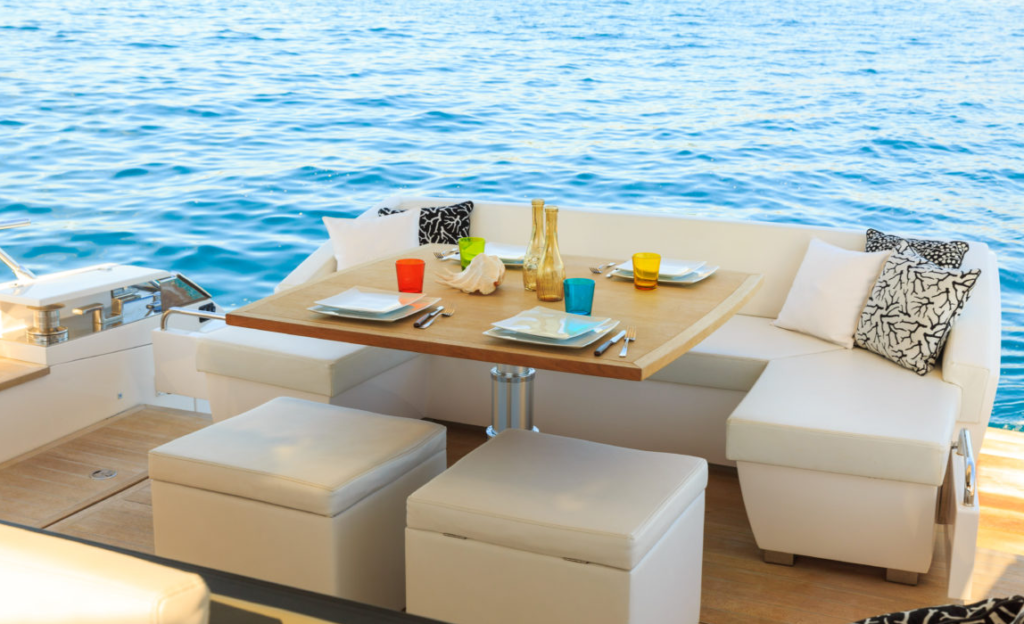
Entertaining Requires a Balance of Style and Durability
Boats used for social events need interiors that look attractive while remaining practical.
Guests may bring food, drinks, sunscreen, and wet clothing onboard. Seating should therefore be easy to clean and resistant to everyday wear.
Owners can also use design details to create a more sophisticated atmosphere.
Popular choices include:
- Two-tone vinyl
- Decorative stitching
- Contrasting piping
- Custom embroidery
- Coordinated cushions
These features can create a polished interior without sacrificing functionality.
Open Boats Need Strong UV Protection
The location of the seating also matters.
Open cockpit seats receive significantly more sunlight than protected cabin seating. Continuous UV exposure can cause fading and eventually contribute to surface deterioration.
When choosing an upholstery boat seat for an exposed area, look for marine materials with strong UV resistance.
A properly fitted cover can provide additional protection when the boat remains unused.
Marine Vinyl Offers Practical Advantages
Marine vinyl remains one of the most common choices for boat seating because it can combine durability with a wide range of visual options.
Quality marine vinyl can provide resistance to:
- UV exposure
- Moisture
- Saltwater
- Mold and mildew
- Frequent cleaning
- Everyday abrasion
The material should still be selected according to the specific environment and expected level of use.
Foam Should Not Be Overlooked
A new exterior covering cannot compensate for severely worn cushioning.
Foam can lose its shape after years of repeated pressure. It may also become affected by moisture if water reaches the interior of a cushion.
Replacing old foam during an upholstery boat seat restoration can improve support while giving the finished seating a cleaner shape.
This can be especially valuable for helm and cockpit seating that receives heavy use.
Color Choices Can Change the Interior
Material performance is essential, but visual design also matters.
Light colors can create a bright and open atmosphere, while darker accents can add contrast. Coastal shades such as blue, white, gray, and sand remain popular for many marine interiors.
A thoughtful color combination can make new seating feel integrated with the boat rather than simply replaced.
Maintenance Should Influence Your Decision
The easiest upholstery to maintain is often the most practical choice for an active boat.
Owners should consider how much time they are willing to spend cleaning and protecting their seating. A material that looks attractive but requires complicated maintenance may not be ideal for a frequently used vessel.
Regular care should include:
- Removing salt residue
- Wiping seats after trips
- Cleaning spills promptly
- Drying wet cushions
- Checking seams
- Protecting seating during storage
These habits can extend the useful life of an upholstery boat seat.
Think About Long-Term Value
Choosing durable materials can reduce the need for frequent repairs.
Although premium upholstery may require a larger initial investment, better materials and construction can provide greater longevity. This becomes particularly important for boats used throughout the year.
A well-maintained interior can also contribute to the overall presentation of the vessel when the owner eventually decides to sell or upgrade.
Final Thoughts
The best marine seating depends on how a boat is actually used. Fishing vessels need practical and easy-to-clean surfaces, cruisers benefit from supportive cushioning, and entertaining boats can combine durability with sophisticated design.
An upholstery boat seat should therefore be selected as part of the overall boating experience rather than as an isolated design decision. With suitable marine materials, quality foam, thoughtful styling, and consistent maintenance, owners can create seating that remains comfortable and dependable through many seasons on the water.